About the Project
Marshes for Maine’s Future used an innovative Collaborative Learning approach to facilitate the transfer of geospatial tools developed by USGS to marsh managers in Maine. The tools allowed marsh managers to geospatially evaluate landscape integrity in relation to vegetation patterns, predicted marsh lifespan, and coastal hazards. Five knowledge-sharing workshops, all designed using a Collaborative Learning Approach, provided opportunities for multidirectional exchange of knowledge among the geospatial tool developers and Maine marsh managers. Applying the geospatial tools during Collaborative Learning workshops contributed to work protecting, restoring and managing Maine’s salt marshes.
About these Resources
This set of resources is for Training and Engagement professionals and geospatial tool designers who want to design, implement and evaluate projects that produce effective and efficient outcomes that achieve resilience goals and maintain ecosystem services. The focal point is the Step-by-Step guide, which includes summaries and materials from each workshop, as well as samples of the training tools used during each step of the process.
Step-by-Step Guide for the National Estuarine Research Reserve System
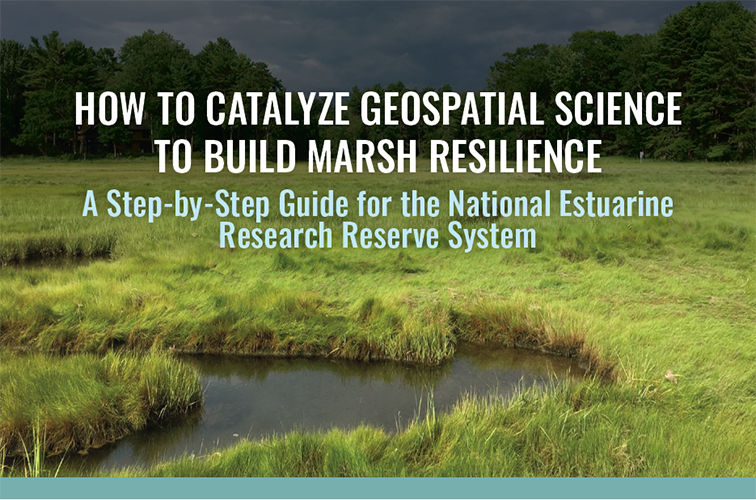
This Guide presents a 9-step Collaborative Learning model for transferring geospatial science across the NERRS. At the heart of the model is a guiding question: How can we ensure that the people who would benefit from geospatial tools use them? It is for Training and Engagement professionals who embrace the role of boundary spanners working at the interface between geospatial tool developers and busy natural resource managers whose frequent reaction to new geospatial tools is: “Not another tool!”
Storymap: Marshes for Maine's Future
This storymap features the project's processes, geospatial tools, and communications tools, as well as summaries of the marsh projects that were the main focus of the Collaborative Learning workshops.
Feurt, C. 2025. How to Catalyze Geospatial Science to Build Marsh Resilience, A Step-By-Step Guide for the National Estuarine Research Reserve System. Wells National Estuarine Research Reserve. Available: https://nerrssciencecollaborative.org/resource/maine-marshes-training-guide