About the Project
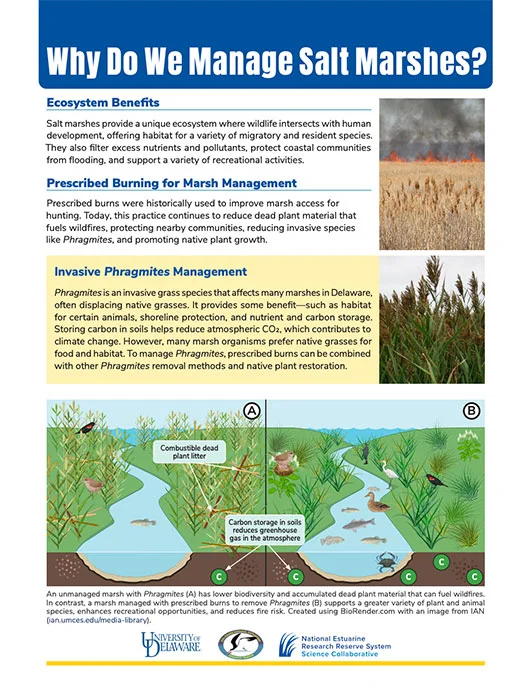
Phragmites australis is an invasive grass species that affects many marshes along the U.S east coast, often displacing native grasses. Removing Phragmites has been a decades-long management goal as managers seek to restore native high marsh habitat and ecosystem functions and services. Phragmites removal and restoration efforts have proven beneficial for habitat and biodiversity. However, its removal has potentially negative impacts on water quality and carbon storage. A potential approach for managing tradeoffs associated with Phragmites removal is to use prescribed fire. While prescribed fire is a common method for vegetation removal, there has been limited research on the biogeochemical benefits provided by burned biomass or “biochar” left behind after these fires. Collaborating with regional coastal managers, this project team compared salt marshes with and without a history of prescribed burns at Delaware National Estuarine Research Reserve and nearby marshes to better quantify how prescribed burns and biochar impacts marshes and their ecosystem services.
About this Resource
This one-pager offers a brief introduction to the importance of marshes and why they are managed with prescribed burning.