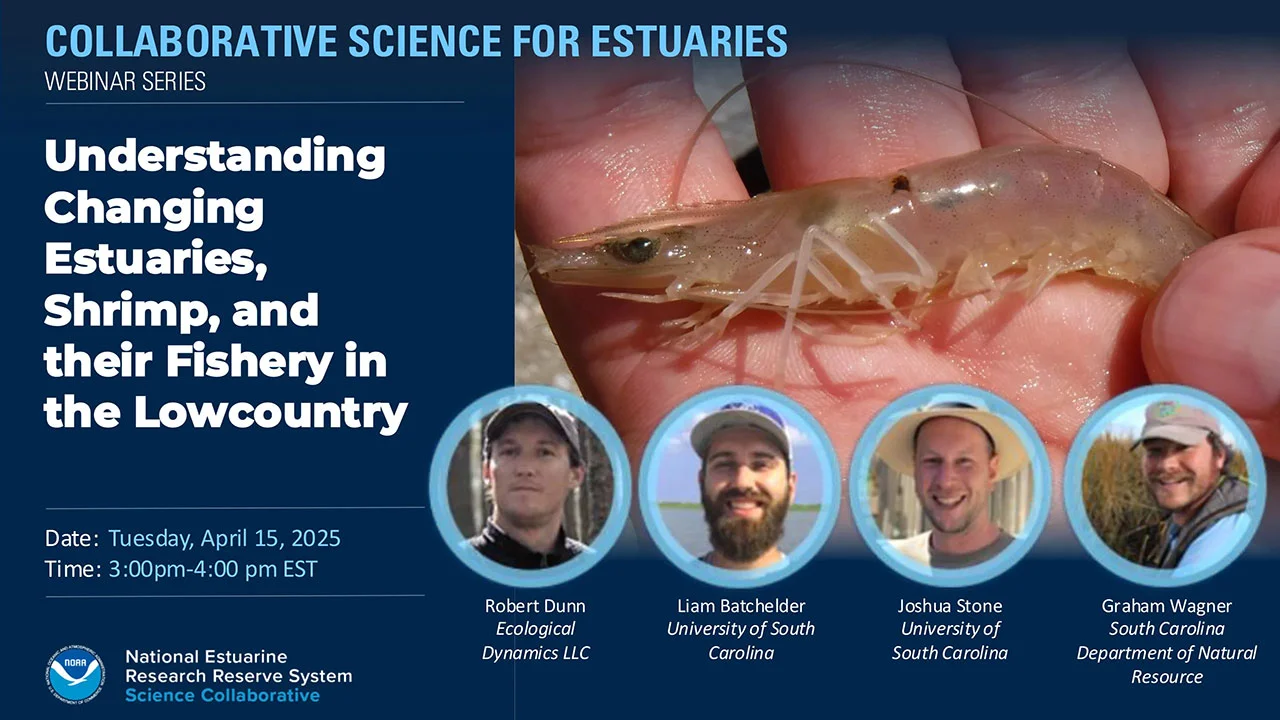
Webinar Description
Estuaries are complex seascapes encompassing multiple habitat types that support critical nursery functions for shrimp and other commercially-harvested species. Shrimp reside in estuaries during multiple life-stages and, because shrimp life history occurs on an annual scale, populations are sensitive to changes in environmental conditions and available habitat. Commercial shrimp landings have been variable over the past two decades, and the effects of environmental factors on shrimp abundance remain unclear. There is therefore a need to better understand changes in shrimp populations in response to environmental variability due to changing climate conditions, weather events, and habitat modifications.
In this webinar, the Lowcountry Shrimp Collaborative team – which spans universities, fishery management agencies, fisheries extension offices, and NERR sites – presented results from their project, which used a multi-faceted research framework to better understand the importance of different estuarine habitat types and variable environmental conditions on shrimp populations. Watch the session to learn more about the team’s approach, which utilized ongoing, long-term biological surveys within estuaries across South Carolina and Georgia, new data collection in the field and lab, and interviews with shrimp industry end-users to better understand the effects of varying environmental conditions on shrimp population dynamics and the associated shrimp fishery.
Webinar Summary Products
- Webinar Recording (YouTube)
- Speaker Bios (Webinar page)
- Slides and Q&A (PDF)