About the Project
Through an iterative process with Tijuana River NERR and other users, this project co-developed a biosensor system that uses shellfish (oysters and mussels) as biosentinels. Alongside land managers and other wetland and aquaculture professionals, the team designed an open-source electronic sensor that attaches to shellfish and monitors gaping behavior and heart rate. The resulting data provides a direct metric of biotic stress. The team deployed this technology in three field locations in San Diego. The biosentinels provided real-time data streams associated with a variety of changing water quality conditions, including frequent salinity and oxygen fluctuations in Tijuana River Estuary and mouth closure events in Los Peñasquitos Lagoon.
About this Resource
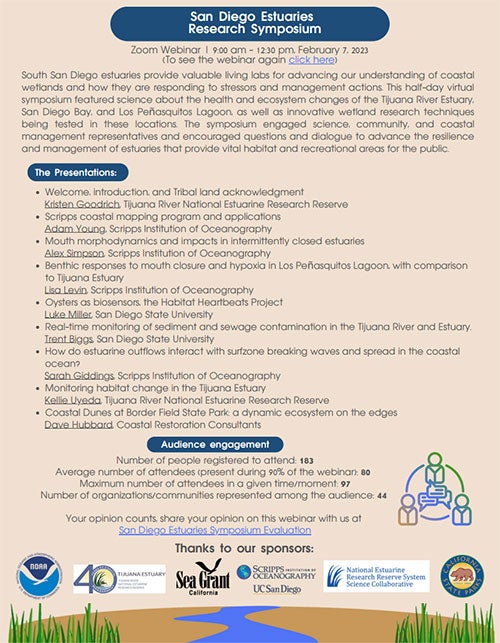
This half-day virtual symposium featured cutting-edge research about the health and ecosystem changes of the Tijuana River Estuary and Los Peñasquitos Lagoon and innovative techniques being tested in these locations as well as in San Diego Bay. Findings from the Habitat Heartbeat project were presented at the symposium alongside additional topics included connections between the outer beach and estuary inlets, monitoring hypoxia and contaminants, and salt marsh and dune habitat changes. See the symposium summary or watch the symposium recording to learn more.