About the Project
Restoring shellfish populations can help control eutrophication and achieve mandated water quality targets; however, this approach requires that ecosystem managers have a better understanding of how nitrogen moves through their estuary and the capacities of shellfish communities to remove nitrogen (N).
By leveraging a well-established collaborative group at GTM Reserve and engaging additional users, this project helped create a better understanding of shellfish distributions, health, filtration capacity in and around the Guana River Estuary. The project not only generated valuable water quality and shellfish data but it also established a path for increased research and monitoring by fostering connectedness between people and data.
About the Resource
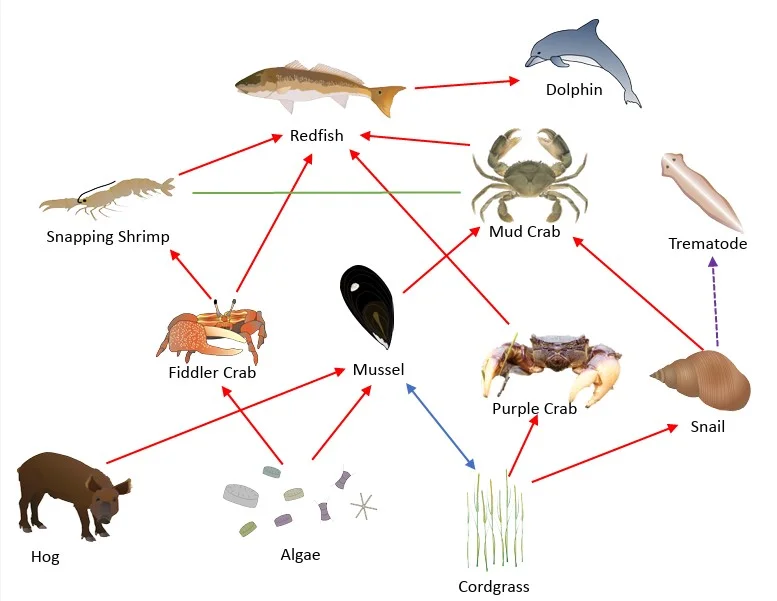
Inspired by water quality research at the Guana River Estuary, this grade seven lesson plan instructs students to build a salt marsh food and relationship web, identify relationships (mutualism, commensalism, etc.) within an ecosystem, and assess how changes in resources cascade throughout a food web and impact multiple species because of their interconnected relationships.
The lesson plan and its accompanying resources can be downloaded below. Or use the blue button in the upper righthand corner of this page to visit Virginia Scientists & Educators Alliance’s web page to find this lesson plan along with other classroom-tested science lesson plans.