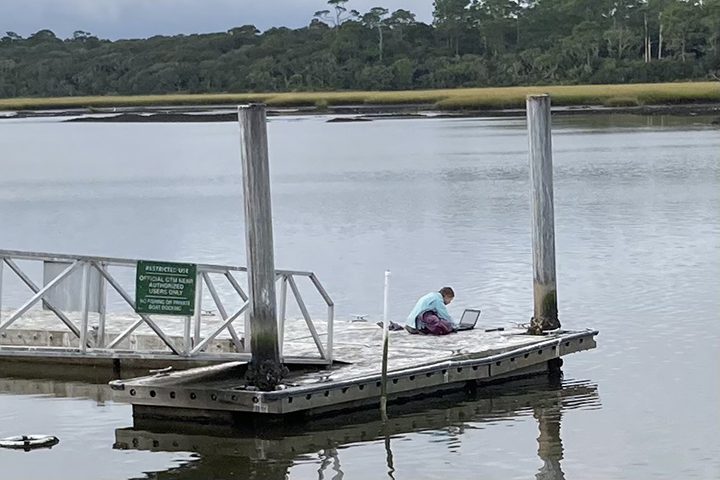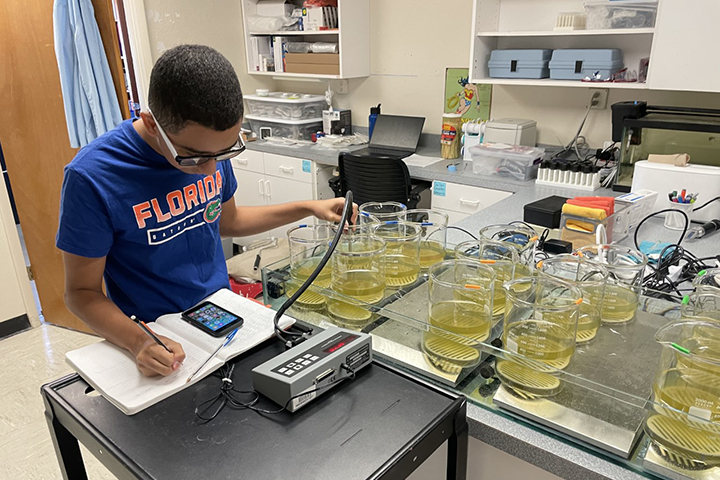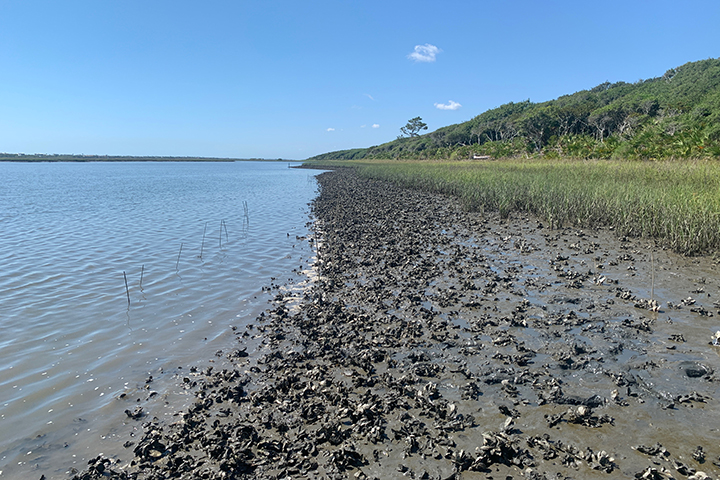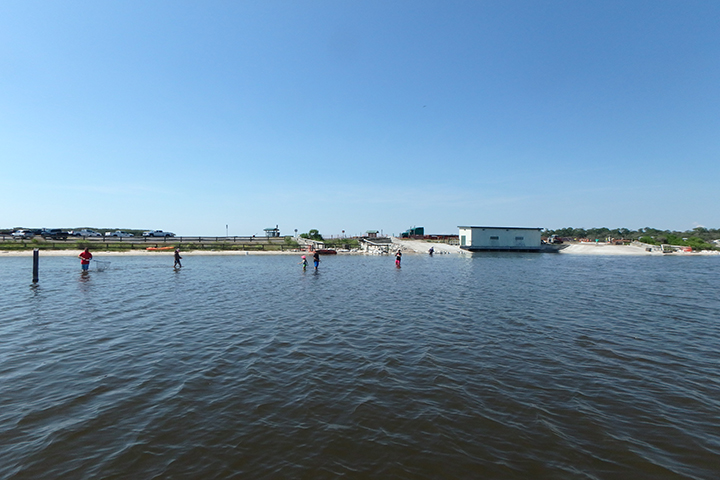
A science transfer project in Florida collaboratively developed an interactive dashboard to support open access data science and provide access to non-SWMP ecological data sets and visualizations for the Guana River Estuary.
The Project
The Guana Tolomato Matanzas (GTM) Reserve in Northeast Florida includes a range of water resources and unique habitat types. Across the reserve, a variety of user groups need both physical access to natural resources and virtual access to data from a variety of sources. Though NERRS System-wide Monitoring Program (SWMP) data are publicly available through the Centralized Data Management Office, local partners also often express interest in non-SWMP data as well.
In collaboration with the GTM Reserve, and in response to a need articulated by reserve staff and local community partners, a project team at the University of Florida developed an interactive dashboard using an application package called “Shiny,” which is based on the programming language R. The dashboard supports open data science and provides access to non-SWMP ecological data sets and visualizations for the Guana River Estuary. It is also public-facing and designed to provide a range of users – including reserve staff, visiting scientists, local resource managers, and residents – with access to monitoring data and visualizations related to water level and quality. While the team specifically designed the dashboard to meet needs expressed by local intended users, it also serves as a model for other reserves interested in making interactive data visualization tools available to their communities.
The Impact
- Participation in workshops and the development cycle helped local scientists, professionals, and community members identify and acknowledge differences in their needs related to data access and visualizations.
- The engagement approach underscored the importance of including feedback cycles and identifying use cases for communications products as part of a project’s design, especially for data-centric products that have a range of potential users.
- The public-facing dashboard positions the reserve to more effectively advise people who come to them asking for access to and help interpreting data collected in the Guana Estuary.