- Watch: Full Session Recording (YouTube)
- Explore: Webinar Summary Resources
Phragmites australis is an invasive grass species that affects many marshes along the U.S east coast, often displacing native grasses. Removing Phragmites has been a decades-long management goal as managers seek to restore native high marsh habitat and ecosystem functions and services. Phragmites removal and restoration efforts have proven beneficial for habitat and biodiversity – however, its removal comes with uncertainties about the tradeoffs of removal and the implications for achieving marsh restoration goals. One potential approach for managing tradeoffs associated with Phragmites removal is to use prescribed fire, which is a common method for vegetation removal. The burned biomass, or “biochar,” produced through this process may increase soil nitrogen removal and carbon and phosphorus storage, which can help to counteract losses in ecosystem services due to Phragmites removal.
In collaboration with regional coastal managers, this project compared salt marshes with and without a history of prescribed burns at Delaware National Estuarine Research Reserve and area marshes to better quantify how fire impacts marshes and their biogeochemical ecosystem services. Recognizing that each manager prioritizes marsh ecosystem services differently, the project assessed how prescribed burns influence a range of recreational, physical, biological, and biogeochemical ecosystem services. A collaborative workshop brought together representatives from industry, state, federal, non-profit, and academic sectors for further conversation and to identify challenges and opportunities for effective Phragmites management. In this webinar, the project team shares: 1) an overview of their technical work to establish some of the biogeochemical impacts of prescribed burns in salt marsh ecosystems; 2) the results of their literature review assessing how prescribed burns to remove Phragmites impact a suite of salt marsh ecosystem services; and 3) the outcomes of the collaborative Phragmites management workshop.
Speakers:
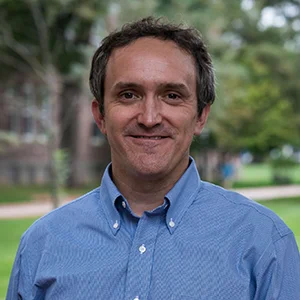 | Andrew Wozniak, University of Delaware Dr. Andrew Wozniak is an Associate Professor in the School of Marine Science Policy College of Earth, Ocean, and Environment at the University of Delaware. He is a marine organic geochemist who specializes in the characterization of complex natural organic matter using a variety of analytical techniques. Dr. Wozniak has particular interest in science that informs coastal and estuarine ecosystem management, including salt marshes. He served as the project and technical lead for this NERRS Science Collaborative project. |
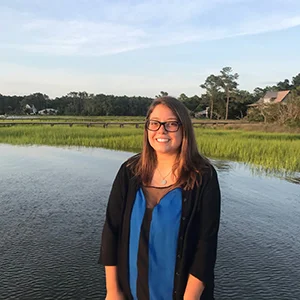 | Mollie Yacano, Delaware Department of Natural Resources and Environmental Control Dr. Mollie Yacano is the Research Coordinator and Senior Environmental Scientist for Delaware’s Coastal Program. She is responsible for overseeing Delaware National Estuarine Research Reserve’s applied science and monitoring programs. She received her B.A. in Marine Science from Boston University and her PhD in Marine Sciences from the University of North Carolina Chapel Hill. Dr. Yacano is a biogeochemist who specializes in nutrient cycling in coastal systems. She served as the collaborative lead on this NERRS Science Collaborative project. |