- Watch: Full Session Recording (YouTube)
- Explore: Webinar Summary Resources
The Eelgrass Resilience Project was a three-year collaborative research effort designed to bridge science and management and address eelgrass habitat loss in the Great Bay Estuary, NH. The estuary is currently classified as nitrogen impaired, primarily due to significant declines in eelgrass (Zostera marina). Despite more than a decade of discussion, uncertainty remains about the factors affecting eelgrass health and the role of nitrogen reduction—creating challenges for effective action.
This project brought together hydrodynamics, biogeochemistry, and ecology to explore how factors such as water residence time, nitrogen loading, in-situ nitrogen processing, sediment dynamics, and light availability influence eelgrass resilience. The team assessed spatial trends across the estuary and conducted a cutting-edge experiment to measure nitrogen processing along a flow path through an eelgrass meadow. In this webinar, the team presents their scientific methods, key findings, and project deliverables. They also share insights from working with a Project Advisory Committee that connected the team with municipal and state decision-makers, as well as national experts who provided real-time peer feedback throughout the project.
Speakers:
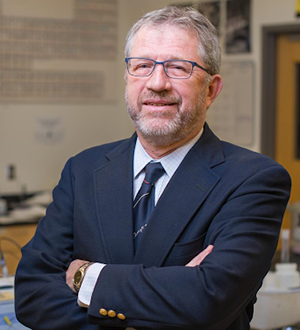 | Bill McDowell, University of New Hampshire Bill is an ecosystem scientist and recently retired professor in UNH’s Department of Natural Resources and the Environment. He studies water quality trends and biogeochemical cycles in streams, forests and watersheds, with a special focus on how people have impacted nitrogen cycling. He leads long term research programs in the Lamprey River in NH as well as in the Luquillo Experimental Forest in Puerto Rico. As project lead, Bill provided overall scientific leadership and helped the team apply an ecosystem science perspective to understand how water quality and aquatic plants interact to protect an important habitat. |
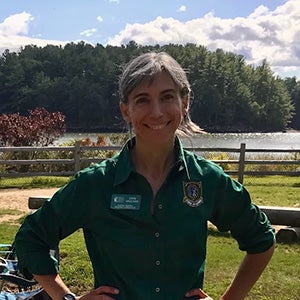 | Lynn Vaccaro, Great Bay National Estuarine Research Reserve Lynn is the Training and Engagement Coordinator at the Great Bay National Estuarine Research Reserve in New Hampshire. She has a background in both education and ecological research and experience working with researchers, decision makers and local communities. Just before coming to GBNERR, Lynn was a collaborative research manager for the NERRS Science Collaborative. For this project, Lynn served as a co-collaborative lead alongside Cory Riley. |
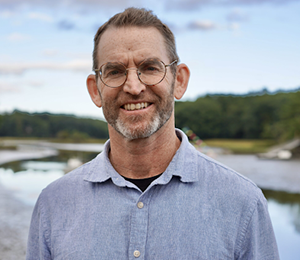 | Kalle Matso, Piscataqua Region Estuaries Partnership As director of the Piscataqua Region Estuaries Partnership, Kalle works on a range of issues across the NH coastal zone and watershed. He leads the development of the influential State of the Estuary Report and fosters multi-sector collaborations with a special focus on eelgrass and water quality. For this project, he helped design the collaborative process, ensured the team stayed relevant to ongoing policy discussions, and worked closely with a small group of external advisors to facilitate a real time peer review process. |